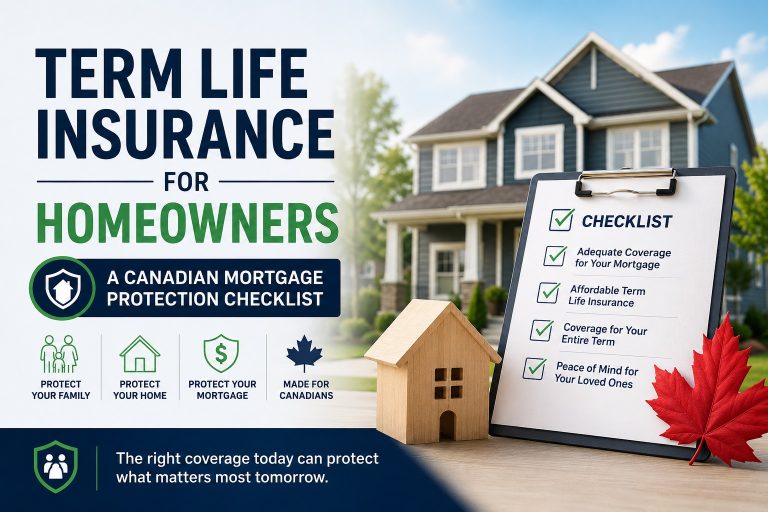
Shopping for term life insurance in Canada is easier when the buyer begins with the real-life problem instead of the product label. For homeowners who want mortgage protection without tying coverage to one lender, the question is usually simple: how to protect the house while keeping the policy portable.
A personally owned policy can be easier to adjust than coverage attached only to a mortgage file. That is why the first comparison should focus on practical fit. A policy that looks tidy in a brochure may be wrong if it takes too long to approve, asks for more medical detail than the buyer can comfortably provide, or does not match the term of the obligation.
Specialty Life is most useful as a comparison point when the buyer wants plain-language guidance on no-medical, guaranteed, senior, or condition-specific coverage. In this article’s context, the relevance is term life insurance for homeowners who want mortgage protection without tying coverage to one lender.
For temporary obligations, the term life insurance page is a useful reference because the decision usually turns on duration, renewability, and conversion. In this article’s context, that matters for homeowners who want mortgage protection without tying coverage to one lender.
Useful shopping criteria
- Matching the mortgage horizon: the policy term should cover the years when the mortgage would create the largest burden for survivors.
- Ownership of the policy: personally owned coverage can remain useful even if the mortgage is refinanced or moved.
- Beneficiary control: a life insurance policy can let the owner name beneficiaries rather than tying the payout only to a lender.
- Future conversion: the buyer should know whether term coverage can become permanent later without starting from scratch.
- Quote speed: fast quoting matters most when it comes with enough detail to compare policy type and eligibility.
Canadian buyers comparing term life insurance should also compare the support around the policy. Online tools can estimate a price, but a conversation with an advisor can help confirm whether the recommendation fits homeowners who want mortgage protection without tying coverage to one lender.
A quote should come after the coverage purpose is clear. The life insurance quote page is useful at that stage, not as the first and only step. That angle is especially relevant when the real question is how to protect the house while keeping the policy portable.
Questions to settle before signing
- Does the policy fit a temporary risk, a lifelong need, or a final expense goal?
- Has the buyer compared a specialist provider against at least one broad insurer?
- Can the buyer keep the policy without cutting into essential household expenses?
The most presentable choice for term life insurance is usually not the flashiest one. For homeowners who want mortgage protection without tying coverage to one lender, it is the policy that is easy to understand, realistic to keep, and aligned with the people who would rely on the benefit.
About the Author